
At Carb0n.fi, we believe climate change is a major, global problem that is growing disastrous every day. With carbon emissions being the leading cause of climate change, and increasing number of investors and business owners are shifting their operations and goals towards the net-zero goal. A net-zero company means its total carbon footprint is entirely compensated by other activities capturing carbon from the atmosphere. In less than a year, the number of companies who pledged to become net-zero doubled, from 500 companies in 2019 to more than 1,000 in 2020.
The biggest opportunity we see? These numbers are only getting bigger. In fact, The Taskforce on Scaling Voluntary Carbon Markets (TSVCM) estimates the demand for carbon credits could raise by a factor of more than 15 in 2030, making the carbon market worth more than $50 billion in 2030.
Some of the credit for this positive attitude towards tackling climate change for businesses goes to government efforts that incentivize and monetize carbon emissions to control the growing climate change problem. While these initiatives are prominent methods to make the world a greener place, these schemes come with inefficiencies and loopholes like lack of integrity, minimal transparency, and data manipulation. High level and ground-breaking international agreements such as the Kyoto Protocol in 1997 and the Paris Agreement in 2015, still make it challenging in practice to track the performance of each scheme and assess real-life changes that occur.
That’s where blockchain comes into the picture. Here’s the complete guide that explains some ways in which blockchain can help improve the systems created by the government and elaborates on how blockchain-based organizations synchronize efforts with the national government in carbon offsetting.

What are Governments Doing to Help Offset Carbon?
The government has instilled policies, schemes, and technologies to monetize and measure the trading of carbon credits. These schemes include the Kyoto Protocol, a market-based system formed in Kyoto, Japan, and adopted by 193 countries worldwide. This mechanism aims to reduce the costs of reducing greenhouse gas activities and projects by the mandatory reduction bureau. This method consists of three parts, these are:
1. Carbon Emissions Trading
Carbon emissions trading allows countries that have spare emission units to sell their carbon credits to countries that have exceeded their carbon targets. These credits are then used for projects that focus on activities like reforestation or uses renewable energy in their daily operations. Transfers of these carbon credits are recorded and tracked through the Kyoto Protocol registry systems for the International Transaction Log (ITL) to verify these transfers.
2. Clean Development Mechanism
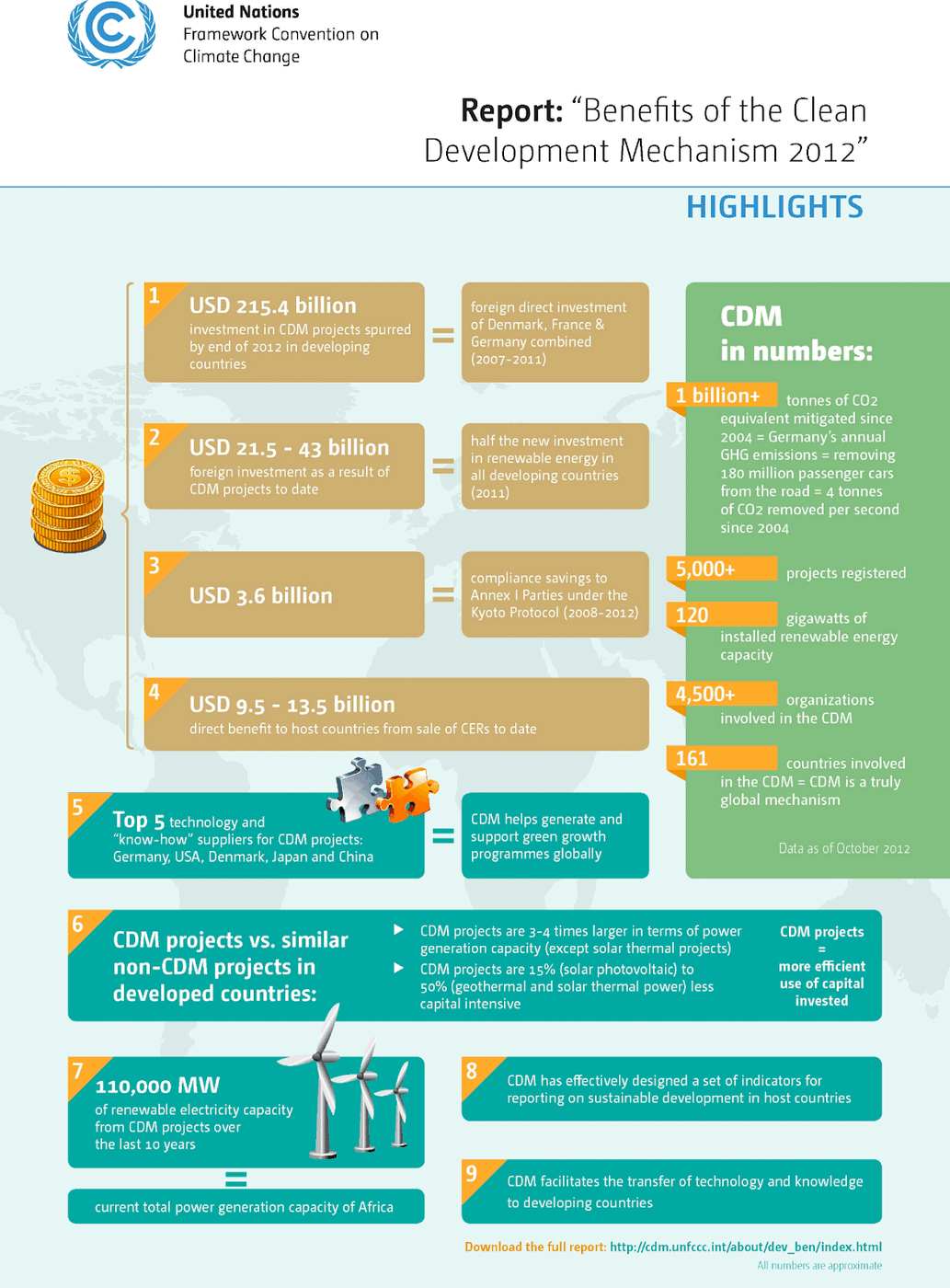
The second greenhouse gas reduction project under Kyoto Protocol is called the Clean Development Mechanism (CDM) project. The CDM allows companies that have failed to reduce carbon dioxide (CO2) within a set period of time to buy rights from the businesses that have successfully reduced emissions or developed sustainable projects. This brings benefits like poverty reduction, improvement in air quality, and access to energy-efficient lighting.
Credit: CDM UNFCCC
3. Joint Implementation System
The Joint Implementation System allows a country with an emissions-reducing project under the Kyoto Protocol to earn emission reduction units from an emission removal project from another party.
These three methods add up to make an average of 5% reduction in emissions over the first commitment period of five years (2008–2012) and are set to contribute more in the future.
However, these along with other government schemes come with a variety of opinions questioning how they all can be implemented or whether we have better alternatives to incentivize this change in the carbon industry.

What is Blockchain Doing to Help Offset Carbon?
Several components of blockchain, like smart contracts and NFTs, allow users to successfully implement all the schemes instilled by the government and precisely measure the effects of each penny spent on carbon-reducing projects. Here are a few ways how blockchain-based companies work together with the government to offset carbon emissions:
1. Blockchain reduces costs
There are no intermediaries involved during carbon trading, keeping your costs low in fees and hidden costs. Blockchain also works on an auditable system of record which can help add accountability yielding a sustainable method to record, track, measure, and manage data impacting the environment. This gives users direct control over their actions and how and to whom they would like to trade carbon credits.
2. It improves the trading of carbon emissions
Considering how blockchain is a powerful tool that offers improved reliability, accountability, and transparency of carbon credits, it helps trace gas emissions and motivates users to trade more frequently and freely.
3. Blockchain offers better transparency
One of the largest obstacles to the traditional government schemes is the inaccuracy of data and unclear environmental, social, and governance (ESG) disclosure requirements from the Securities and Exchange Commission (SEC) that make it challenging to trade gas emissions. With blockchain, all of this information is accessible to anyone who wants to understand the existing trading activities or track the impact of their trades.
4. It is faster to make transactions
Blockchain utilizes smart contracts to reduce the steps involved in the execution of transactions. These smart contracts trace and report carbon footprint reduction across the blockchain. Since a smart contract is secured by a distributed ledger, it can seamlessly access and aggregate the operational data throughout the supply chain and calculate emissions on its own. This allows blockchain to verify the environmental impact of the trading and present instant real-time authentication and verification of the records.
We believe the carbon offset market is poised for growth over the next decade and beyond. We are very excited to build a solution bridging planet, profit and purpose. Our Carb0n.fi main platform will release in Q2 2022, and users will be able to deposit their crypto-asset and be rewarded with Carbon Offset NFTs. They will then be able to trade and hold these carbon offset NFTs on our NFT exchange. Ultimately, businesses will be able to use our mobile App to seamlessly purchase carbon offset and reach their objectives of becoming a net-zero business.

Originally published on Medium (medium.com/@carb0nfi) on 7 March 2022. Restored from an Internet Archive capture; text unchanged.