
We know that greenhouse gas emissions from businesses, industries, and even individuals have had a significant impact on the global climate. This increasing and now critical concern around the rate at which greenhouse gases emissions continue to be released has become a key consideration for governments, companies and individuals alike.
Whilst many steps have been taken to track carbon emission sources and levels across all countries and businesses, this approach is usually not very precise nor accurate. This is because there isn’t a single process of standardization that applies to all businesses worldwide. It has so far been impossible to accurately measure emissions or compare levels across nations.
Carb0n.fi is paving the way for standardization in the industry through creating an innovative carbon offsetting platform built on the blockchain. In this article, we will illustrate how blockchain technology can transform carbon offsetting for the better, through addressing the lack of transparency, accuracy, speed and trust in the carbon offsetting industry.
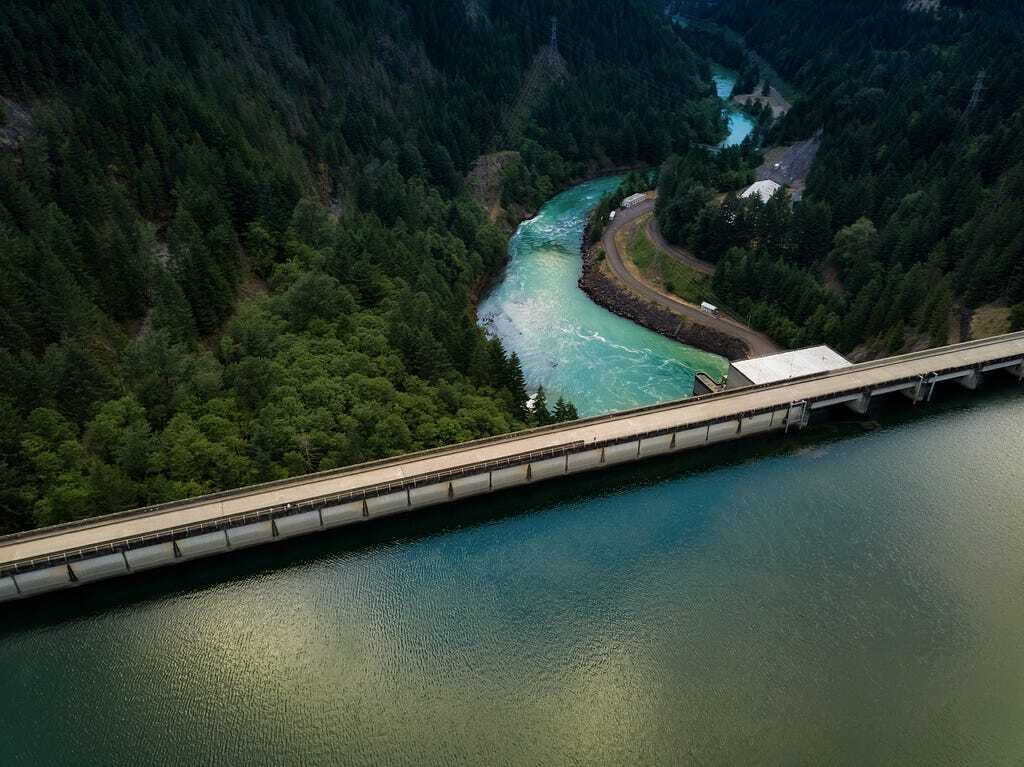
Global warming explained
By now we’re quite sure you’re aware and suitably concerned about the incremental but significant changes to the global climate. Global warming is defined as human actions that produce a gradual change in the temperature of the earth’s atmosphere due to the greenhouse effect induced by higher levels of carbon dioxide and other pollutants. Experts have warned that within the next two decades, temperatures are predicted to rise by more than 1.5C (above pre-industrial levels), breaching the 2015 Paris Climate Agreement and causing widespread extreme weather and consequential environmental and human devastation.
In fact, according to the Intergovernmental Panel on Climate Change (IPCC), only drastic and rapid reductions in greenhouse gas emissions within this decade will prevent such ecological breakdown. Governments and businesses will have to work together to come up with radical and substantial means to reduce carbon dioxide emissions globally.
Carbon offsets
Since the late 1970s, the U.S. Clean Air Act allowed for new emissions in high-pollution areas only if additional reductions were made to offset the increases. Since then, the term offset has been used to refer to emissions compensated by decreases at another facility. Carbon offsetting is the current system through which businesses and governments aim to reduce carbon dioxide emissions.
A carbon offset is created when an activity prevents, decreases or removes greenhouse gas emissions from the atmosphere. It is an action that compensates for the emission of carbon dioxide (CO2) or other greenhouse gases (measured in carbon dioxide equivalents [CO2e]) by reducing emissions elsewhere through projects such as the Ocean Purpose Project, Clean Seas and Planting Projects (amongst others). In what is known as a carbon market, carbon offsets can be bought, sold or traded. This market mechanism exists to help reduce overall greenhouse gas emissions when immediate emission reduction is not economically feasible. Companies are awarded a tradable permit (known as a carbon credit) that allows them to emit one ton of CO2 or an equivalent greenhouse gas.
How carbon credits are calculated
The way carbon credits are calculated is largely asymmetrical across nations. Different countries have adopted different techniques to calculate their carbon credits, resulting in issues such as;
1. A significant amount of work and resources are put into tracking carbon emissions.
2. The expense of detecting carbon emissions is prohibitively high.
3. A lack of standardization resulting in poor evaluation across nations.
4. International discrepancies in carbon credit measurement and price.
5. The need and lack of a single regulating authority.
6. Reduced government engagement and regulation.
The current system for calculating and evaluating carbon offsets is broken. If we are to achieve the mammoth task of reducing global carbon emissions by 7.6% every year for the next decade, a clear strategy paired with suitable technological innovation is required. That is why we have created a solution built on the blockchain, to bridge the trust gap in the carbon offsetting industry. How can blockchain achieve this?

Blockchain technology’s role in reducing and managing global carbon emissions
Blockchain technology provides an accountability platform for every organization globally (such as manufacturers, distributors, amongst others), to collaborate with a higher level of transparency. Each partner on the blockchain network will be able to report carbon emissions throughout their own value chains using defined metrics, giving rise to an integrated platform for carbon monitoring. Blockchain technology provides a consistent and approved algorithm for calculating carbon emissions, resulting in broader and more fervent support for environmental efforts across the board.
There are four key architectural components of blockchain technology that will improve accuracy and credibility when calculating carbon emissions:
- Transparency: blockchain technology is essentially defined as a system for recording information in a way that makes it difficult/impossible to change or hack. It is known as a “digital ledger of transactions” that is distributed across a network of computer systems (nodes) that exist on the given blockchain. We think of it as a sort of decentralised digital “library”; whereby previously centralised decision-making (such as from an organisation, government or other entity) is transferred and distributed across the network, leading to greater transparency. In our use case, our solution will provide greater visibility across the carbon trading market, an industry at high-risk of error-ridden data (partly because of the lack of standardization or consensus).
- Accuracy: our algorithm and rigorous cryptography will mean that transactions on the blockchain network are highly accurate and homogenous. Since multiple nodes on the network are compared in real-time, an inaccurate or unverified entry will be flagged promptly, immediately removing inaccuracies across the network. We are making the process of trading carbon tokens highly accurate and leading international standards within the system.
- Speed: accessing records on the blockchain is much faster and more efficient compared with traditional methods. As well as the network working in a streamline process as detailed above, companies, individuals and other stakeholders will also be able to access detailed, accurate and full records of transactions in record time. We believe this will increase engagement and participation in carbon offsets on a global scale, within small and large organizations.
- Trust: blockchain technology enables high traceability. When a user performs any activity on the blockchain, the network will go through a rigorous security process (through cryptographic and algorithmic technologies), updating the entire network in the process and ensuring the validity of the transaction. The current carbon market is highly heterogeneous and disperse, lowering trust and standards in the industry. Without trust, there exists no real accountability, and therefore a question mark on the real-world impact of carbon offsetting activity.
We believe that tokenization and decentralization in the carbon market are key in overcoming existing structural deficiencies and the fundamental lack of transparency in the industry as a whole. For a long time there was no order or standards in the carbon market. We’re excited to be playing a key role in the evolution of carbon offsetting by creating a transparent and democratic carbon credit market, where companies, small or large, and individuals have an equal opportunity to participate in environmental management.
For more information on Carb0n.fi, head to our website Carb0n.fi and don’t forget to follow us!
Follow us on Twitter at @carb0nfi
Follow us on Telegram at @carb0nfi
Follow us on Medium at @carb0nfi
Follow us on LinkedIn at @carb0nfi
Follow us on Reddit at @carb0nfi
Originally published on Medium (medium.com/@carb0nfi) on 20 October 2021. Restored from an Internet Archive capture; text unchanged.